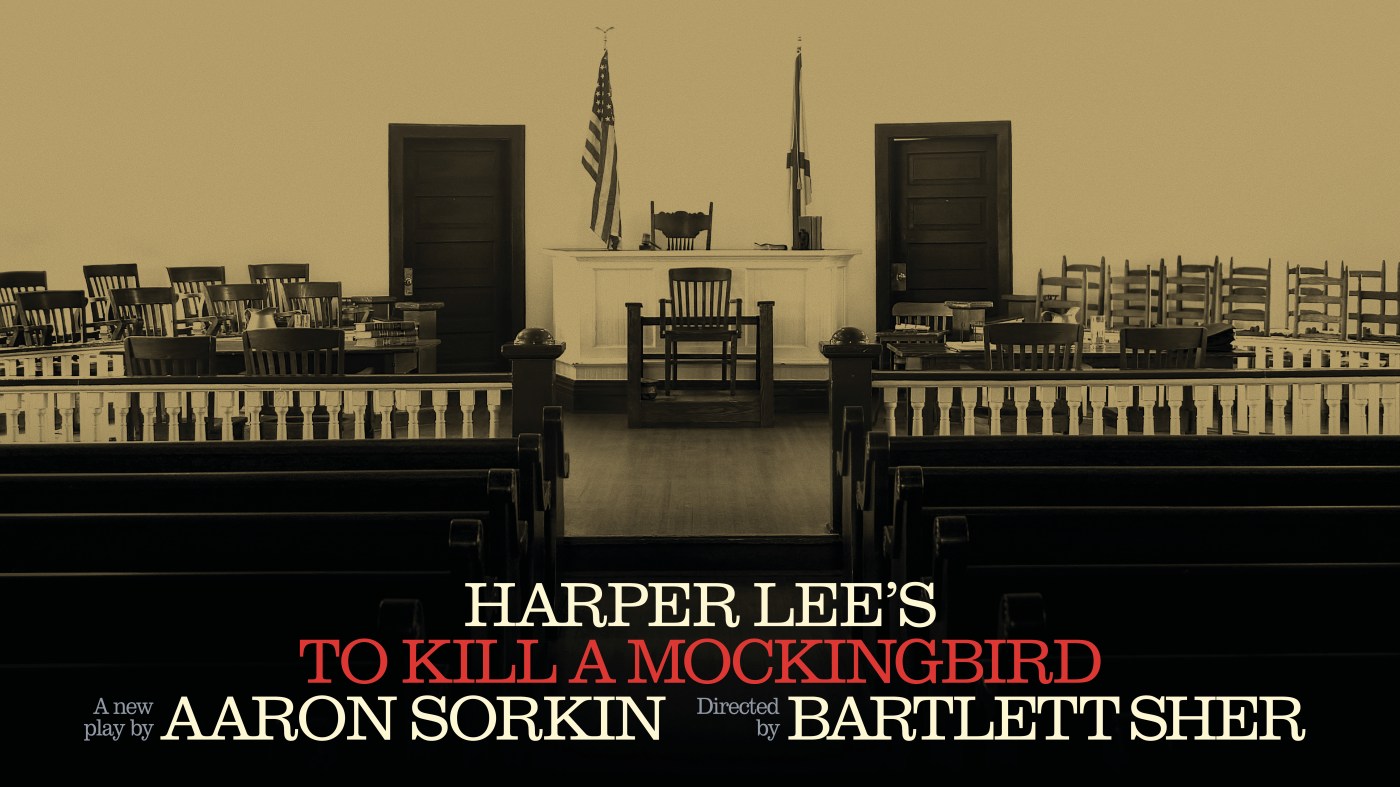
I could make things very simple for myself here and just say that if you are a regular reader of mine, have seen any of the things I write about and agreed with my assessments, log on to https://www.mockingbirdplay.com/tour and book yourself a ticket when the play comes to somewhere within 50 miles of you, or perhaps 100 if you don’t have to walk. This is one of the best written, directed, acted and most powerful plays I have ever seen. It is also one of the funniest.
The theme of the work is race relations in Alabama in the mid 1930s, and, although I have read that Aaron Sorkin, the writer, has modified the 1960 book by Harper Lee to be more relevant to the modern audience, the atmosphere, attitudes and language are still authentic to the time, so, if you are one of those people who like to go out of their way to be offended, this is the one for you. Should you wish to immerse yourself in the dystopian world of racial abuse, lynchings, torture and a rule of law outrageously skewed against certain sections of society, you will also be well catered for.

That last paragraph might have seemed to be a contradiction of the last sentence of the first, but the story is told through the eyes of a young girl, Scout Finch (played by Anna Munden), her brother, Jem (Gabriel Scott), and the boy who stays next door over the summer holidays, Dill Harris (Dylan Malyn). Although a work of fiction, it is based on the experiences of Ms Lee, when she was six years old, Scout being her alter ego, in a small town called Monroeville, Alabama, here changed to Maycomb. As an aside, the character, Dill, is a fictional version of the only other famous native of the place, Truman Capote. This makes his portrayal by Mr Maylin, even more impressive, combining a facade of affected naivety with the ability to convey deep philosophical observations.
There are many strands to the work, which comes in at three hours, but seemed only to last half that time, so it is not possible to follow them all, as they interweave to produce stories of the individuals and the groups to which they belong, in intricate fashion.
The play begins with Scout and Jem discussing the death of Bob Ewell, a local farmer and leader of the Maycomb Ku Klux Klan chapter, who, according to the local newspaper, died an accidental death by tripping and falling on his knife. They are joined by Dill, who adds his forensic opinions as to the cause of death. The consensus is, that in order to make a valid decision, they must go back to the recent trial of Tom Robinson.

Tom Robinson (Aaron Shosanya) is a negro – the word used in the play, along with another which I will not be employing – who has been accused by Bob Ewell of raping his daughter, Myella. Atticus Finch, the father of Scout and Jem, is the local lawyer, specialising in commercial law, and, as the period in question is the Great Depression, he represents the local farmers, accepting payment in kind, i.e. crops. After hearing of the plight of Tom Robinson, whose appointed lawyer has recommended that he plead guilty, thus incurring a sentence of 18 years imprisonment, and realising that he cannot possibly have committed the crime of which he is accused, Atticus takes the case.
The problem is, that despite the overwhelming weight of evidence pointing to his innocence, because he is black, Tom could be found guilty by a prejudiced jury on that fact alone and sent to the electric chair. Should he plead not guilty and be convicted, Atticus believes that on appeal, a hearing which will take place in a large town where the evidence will be given higher prominence than in a backwater court, he may have a better chance of acquittal. Obviously, should he plead guilty, that avenue will be closed. Tom decides to take the advice of Atticus and the trial commences.
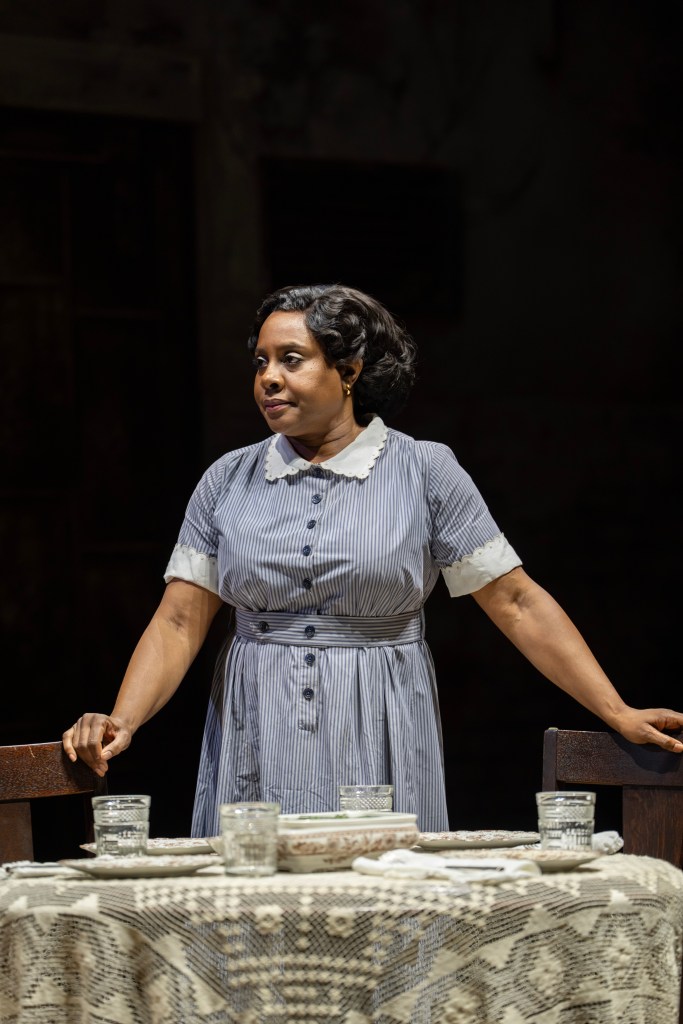
The play has been trailed as a courtroom drama, which indeed it is, but at this point the scene keeps shifting to various locations in Maycomb, mainly the porch in front of the Finch’s house. Atticus, immaculately played by Richard Coyle, and I am not just talking about his cool, linen suit and polished shoes, is raising his two children alone, as his wife died some years before. He is assisted by the family housekeeper, who has held that position for many years. Her name is Calpurnia, who, apart from the cooking and cleaning, was the font of common sense and barbed comment, a role filled, seemingly effortlessly, by Andrea Davy. There was an atmosphere between employer and employee, casting a negative air about the household, but Calpurnia would not reveal the source of the friction until very near the end of the play.

The switching back and forth from the courtroom to the town, showed the animosity toward Atticus from the white residents because he was defending a black man. Bob Ewell, the drunk and abusive father of Mayella, the alleged victim of Tom Robinson, lived up to his reputation throughout, threatening all and sundry both in the town and during the hearing, which caused him to be banned from attending the later stages. He even led a posse of his fellow Klan members to attack Atticus Finch in his home. Oscar Pearce filled this part with unsettling aplomb. Evie Hargreaves as Mayella, spent the first part of the case, in silence next to her father but, once he had been ejected, she gave her evidence displaying the characteristics of a scared girl who had obviously been indoctrinated by her father, even insofar as giving her evidence was concerned. Superb.

The prosecuting counsel, Horace Kilmer, played by Richard Dempsey, was a self-assured bully of a lawyer, who showed his disdain for the black accused by repeatedly referring to Tom Robinson as Boy despite being told by both Atticus Finch and the Judge to call him Mr Robinson, which he occasionally, sneeringly, did. Speaking of His Honour, Judge Taylor, he seemed to be the only person outside of the Finch and Robinson households, who had any semblance of humanity, in fact it was he who persuaded Atticus to take Tom’s case in the first place. Stephen Boxer was exemplary in the role.

Aside from those already mentioned, there was a mysterious character called Boo Radley, (now you know where the 1990s band got its name – you’re welcome) who no one ever saw and it was speculated that he might even be dead. He eventually appeared and, rather than being the rumoured ogre, he was another of the few sympathetic figures. He was played, as was the character, Mr Cunningham, who Atticus was representing at the beginning of the play, by Harry Attwell, who was so good that I didn’t realise that he was multi-tasking until I looked at the cast list in the programme whilst writing this piece.
The trial ends, and, to no one’s surprise, Tom Is found guilty and sentenced to death. Atticus prepares to file his appeal but there is a twist in the tail, which I will not reveal here.
The initial premise of the play, the death of Bob Ewell, is then covered with the revelation that he has attacked Jem Finch one night, breaking his arm and knocking him unconscious. Jem has been carried home by a mystery figure and Bob found dead at the scene with a knife wound.
The following day, Sheriff Tate (Colin R Campbell) and Judge Taylor arrive at the Finch’s and all agree that it must have been an accident. Although Atticus at first believes that it could have been Jem who killed Bob, the unspoken consensus was that it was probably Boo, real name Arthur. As there was no proof, and, as it was also thought that it was Bob who assaulted and abused his daughter, no one went out of their way to pursue the investigation.
Although It might not seem like it, that was a short synopsis, but I felt that a work of this brilliance deserved more of my time than normal. I also enjoyed every minute of reliving it, especially looking back on the comedy aspect, provided by the wit of Atticus, the barbs of Calpurnia, the laconic remarks of Dill and the youthful exuberance of Jem and Scout. It was a wonderful piece all-round and, one which is as relevant in today’s world as much as it was in the 1930s, and we all know where intolerance led at the end of that decade.
All of the creative team were magnificent, as were the actors whose job it was to do some scene shifting without the narrative skipping a beat.
To Kill A Mockingbird continues its run at Leeds Playhouse until 4th October, after which it goes on tour. For more details and to book at Leeds, please go to https://www.leedsplayhouse.org.uk/whats-on/ where you can also find details of what else is coming up at the venue.
For the rest of the tour please click on the link at the top of the page.
Photographs by Johan Persson.

